When Words Aren’t Enough: How Sand Tray Therapy Opens the Door to Healing
By Deborah Cain, AMFT | Central Counseling Services
“Sand therapy can help with anxiety.”
Walking into the therapy room, there is a desk, a lamp, a chair, a couch.
As the therapist, I sit across from a young adult who has experienced trauma. Something painful has happened — but what exactly, and how do I help draw the story out when the story has no words yet?
They shift on the couch, uncomfortable. Unsure where to start. Unsure if they can explain it at all.
This is often the reality of trauma.
And it raises one of the most important questions in therapy:
How do we begin?
With care.
The Challenge of Finding Words
Trauma can affect people in many different ways.
Generally speaking, trauma refers to a psychological response to events that threatened a person’s emotional or physical safety. Not everyone who experiences hardship develops lasting trauma responses, but for those who do, healing can feel confusing, overwhelming, and deeply isolating.
Many people who enter therapy after trauma describe feeling:
Disconnected
Anxious
Emotionally reactive
Numb
Unable to explain what they feel
Often, the hardest part is not only the pain itself — it is the inability to find words for it.
That is where sand tray therapy can be incredibly powerful.
What Is Sand Tray Therapy?
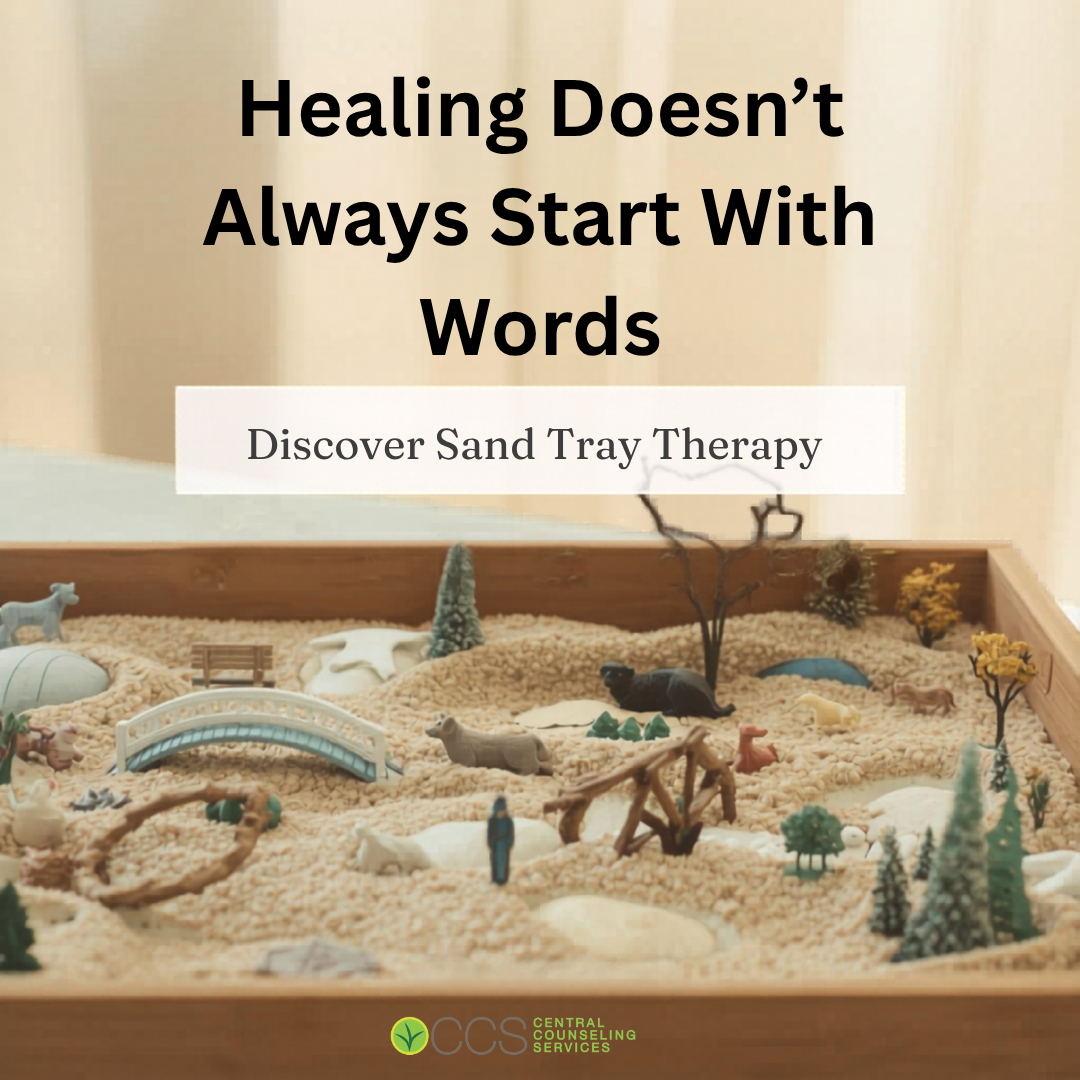
Sand tray therapy uses a shallow tray filled with sand and a collection of miniature figures such as people, animals, buildings, trees, bridges, fences, and symbols.
Clients are invited to create a scene or “world” in the sand.
There is no right or wrong way to do it.
Whatever is created belongs to the client. It becomes a safe and tangible expression of thoughts, emotions, memories, or internal conflicts that may not yet be verbalized.
Afterward, therapist and client explore the scene together:
What figures were chosen?
How were they arranged?
What story might the scene be telling?
The tray often becomes a language of its own.
Why Sand Tray Therapy Works
Sand tray therapy can be especially helpful for:
Children
Trauma survivors
Individuals with anxiety
People who feel stuck or overwhelmed
Anyone who struggles to verbalize emotions
It works because healing does not always happen through talking alone.
The physical act of touching sand and arranging objects can calm the nervous system. Creating something visible can make internal experiences feel more manageable and less abstract.
For many clients, the tray creates enough safety for deeper healing to begin.
A Natural Fit for Children
Children often communicate through play long before they can fully explain emotions.
Sand tray therapy meets them in their natural language.
Rather than asking a child to verbally process something beyond their developmental stage, sand tray allows them to show what they are feeling in a way that feels safer and more natural.
This can create powerful opportunities for connection, insight, and healing.
More Than a Trauma Tool
While sand tray therapy is often associated with trauma work, it can support many other concerns as well.
It may be used with clients experiencing:
Grief
Relationship stress
Life transitions
Anxiety
Emotional overwhelm
Low self-esteem
Feeling disconnected from themselves
Sometimes the most meaningful sessions happen when someone simply needs permission to step out of their head and into their hands.
In a Fast World, Slowing Down Matters
Modern life moves quickly.
Many people spend their days thinking, reacting, managing responsibilities, and pushing through.
Sand tray creates space to slow down and listen inwardly.
It offers a different pace. A different language. A different path into healing.
You Do Not Need the Perfect Words to Begin
If you are feeling overwhelmed, stuck, anxious, or disconnected, you do not need to know exactly how to explain it before seeking help.
Healing does not always begin with the right sentence.
Sometimes it begins with a handful of sand and a small blue bridge placed quietly in the corner of a tray.
At Central Counseling Services, our therapists are here to meet you where you are — with patience, compassion, and more than one way to listen.
📞 Call us: 951-778-0230
🌐 Visit: CentralCounselingServices.net