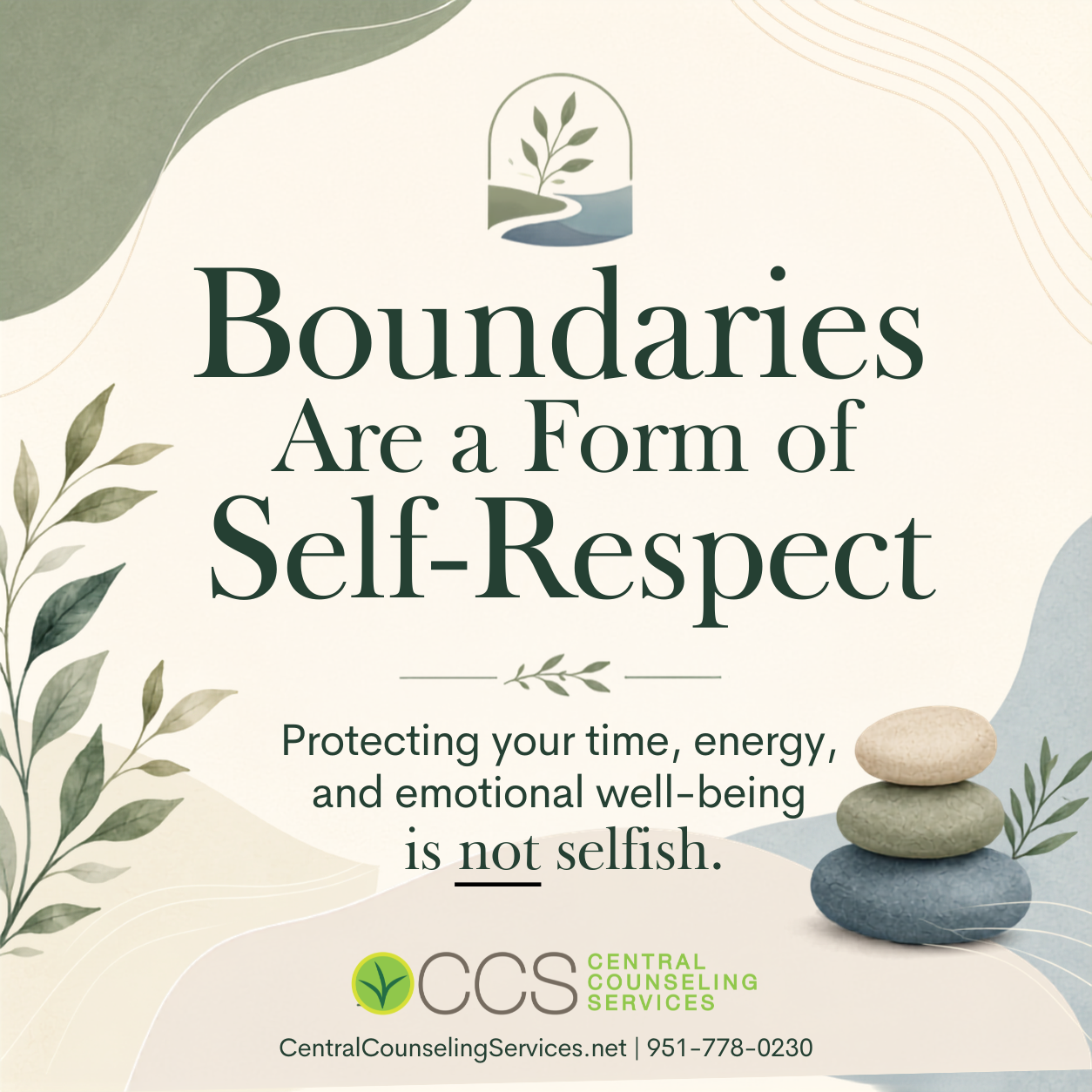
Boundaries Are a Form of Self-Respect
Boundaries are often misunderstood.
Some people hear the word “boundary” and think it means being cold, selfish, distant, or difficult. Others worry that setting boundaries will hurt someone’s feelings, create conflict, or make them seem uncaring.
But healthy boundaries are not about pushing people away.
They are about protecting your time, energy, emotional well-being, and sense of self so you can show up in your life and relationships in a healthier way.
A boundary is not a wall.
It is a clear line that helps you understand where your needs, limits, and responsibilities begin and end.
Why Boundaries Can Feel So Hard
For many people, setting boundaries does not feel simple.
You may understand logically that you are allowed to say no, ask for space, or communicate what you need. But when the moment comes, guilt may show up quickly.
You may think:
“What if they get upset?”
“What if they think I do not care?”
“What if I disappoint them?”
“What if this causes conflict?”
“What if they leave?”
These fears are especially common for people who learned early in life that keeping the peace was safer than being honest.
If you grew up in an environment where love felt conditional, emotions felt unpredictable, or your needs were dismissed, you may have learned to survive by staying agreeable, helpful, quiet, or available.
That pattern can follow you into adulthood.
You may become the reliable one, the fixer, the peacekeeper, the person everyone calls, or the person who says yes even when they are exhausted.
Over time, this can lead to anxiety, resentment, burnout, and feeling disconnected from yourself.
Boundaries Are Not Selfish
One of the biggest myths about boundaries is that they are selfish.
In reality, boundaries can help relationships become more honest and sustainable.
Without boundaries, people often overextend themselves until they become resentful. They may say yes when they mean no. They may avoid hard conversations. They may give more than they have to give and then feel hurt when others do not notice.
Healthy boundaries allow people to show up with more honesty.
A boundary might sound like:
“I cannot take that on right now.”
“I need some time before I respond.”
“I am not available for that conversation tonight.”
“I want to help, but I cannot be the only support person.”
“I need us to talk about this without yelling.”
“I love you, and I still need space.”
Boundaries do not mean you stop caring.
They mean you stop abandoning yourself in order to care for everyone else.
How Poor Boundaries Affect Mental Health
When boundaries are unclear or constantly crossed, the nervous system can stay in a state of stress.
You may feel like you are always anticipating other people’s moods, needs, reactions, or expectations. You may feel responsible for keeping everyone okay. You may struggle to rest because there is always something else you “should” be doing.
Poor boundaries can contribute to:
Burnout
Anxiety
Resentment
Relationship strain
Emotional exhaustion
Difficulty making decisions
Feeling unseen or unappreciated
Trouble knowing what you actually want
For people with trauma histories, boundary-setting can feel especially difficult because the body may associate honesty with danger or rejection. Saying no may feel unsafe, even when the current situation is not actually threatening.
This is one reason therapy can be helpful. It gives people space to understand not only what boundaries they need, but why setting them feels so hard.
Boundaries in Relationships
Boundaries matter in every kind of relationship: romantic relationships, friendships, family systems, parenting, work, and caregiving.
In couples and families, boundary issues often show up as repeated conflict.
One person may feel controlled.
Another may feel ignored.
One may need closeness.
Another may need space.
One may overfunction.
Another may withdraw.
Without clear communication, both people may end up feeling hurt and misunderstood.
Healthy boundaries can support stronger relationships by creating clarity.
They help people talk about needs before resentment builds. They make space for honesty, respect, and repair. They allow people to stay connected without losing themselves.
Signs You May Need Stronger Boundaries
You may benefit from stronger boundaries if you often:
Say yes when you want to say no
Feel guilty for resting
Feel responsible for other people’s emotions
Avoid conflict at all costs
Feel resentful, but do not say anything
Over-explain your decisions
Feel drained after certain interactions
Struggle to ask for what you need
Feel like your needs always come last
These patterns do not mean something is wrong with you.
They may mean you learned to prioritize connection, approval, or safety by minimizing yourself.
The good news is that boundaries are skills. They can be learned, practiced, and strengthened over time.
How to Start Setting Healthier Boundaries
Boundary-setting does not have to begin with a huge confrontation.
It can start small.
Try asking yourself:
Where do I feel resentful?
Where do I feel exhausted?
Where am I saying yes out of fear instead of choice?
What do I need more of: time, space, respect, rest, honesty, help?
What would I say if I believed my needs mattered too?
Then practice one clear, kind statement.
For example:
“I am not able to do that this week.”
“I need time to think before I answer.”
“I care about this relationship, and I need us to speak respectfully.”
“I am going to take some time for myself today.”
You do not have to explain every detail.
You do not have to convince someone that your boundary is valid.
You do not have to wait until you are completely overwhelmed before speaking up.
Therapy Can Help
Therapy can help you understand the patterns that make it difficult to set boundaries.
Maybe you learned to people-please to avoid conflict.
Maybe you were taught that your needs were too much.
Maybe you feel guilty whenever you choose yourself.
Maybe you know what boundary you need, but your body freezes when it is time to say it.
In therapy, you can explore these patterns with support and practice new ways of communicating your needs.
Therapy can also help couples and families understand boundary patterns together, especially when conflict, resentment, emotional distance, or miscommunication have become common.
At Central Counseling Services, we support individuals, couples, and families navigating anxiety, trauma, stress, relationship challenges, parenting concerns, and life transitions.
If you are in Murrieta, Temecula, Wildomar, Menifee, Riverside, or the surrounding areas, support is available.
You Deserve Relationships That Honor Your Boundaries
Boundaries are not punishment.
They are not rejection.
They are not proof that you care less.
Boundaries are part of building a life where your needs matter too.
You can love people and still have limits.
You can be kind and still say no.
You can care for others and still care for yourself.
You deserve relationships that make room for honesty, respect, and emotional safety.
And you do not have to figure that out alone.
📞 Call us: 951-778-0230 or Click below for more information
Educational content only. This blog is not therapy or a substitute for professional care.