
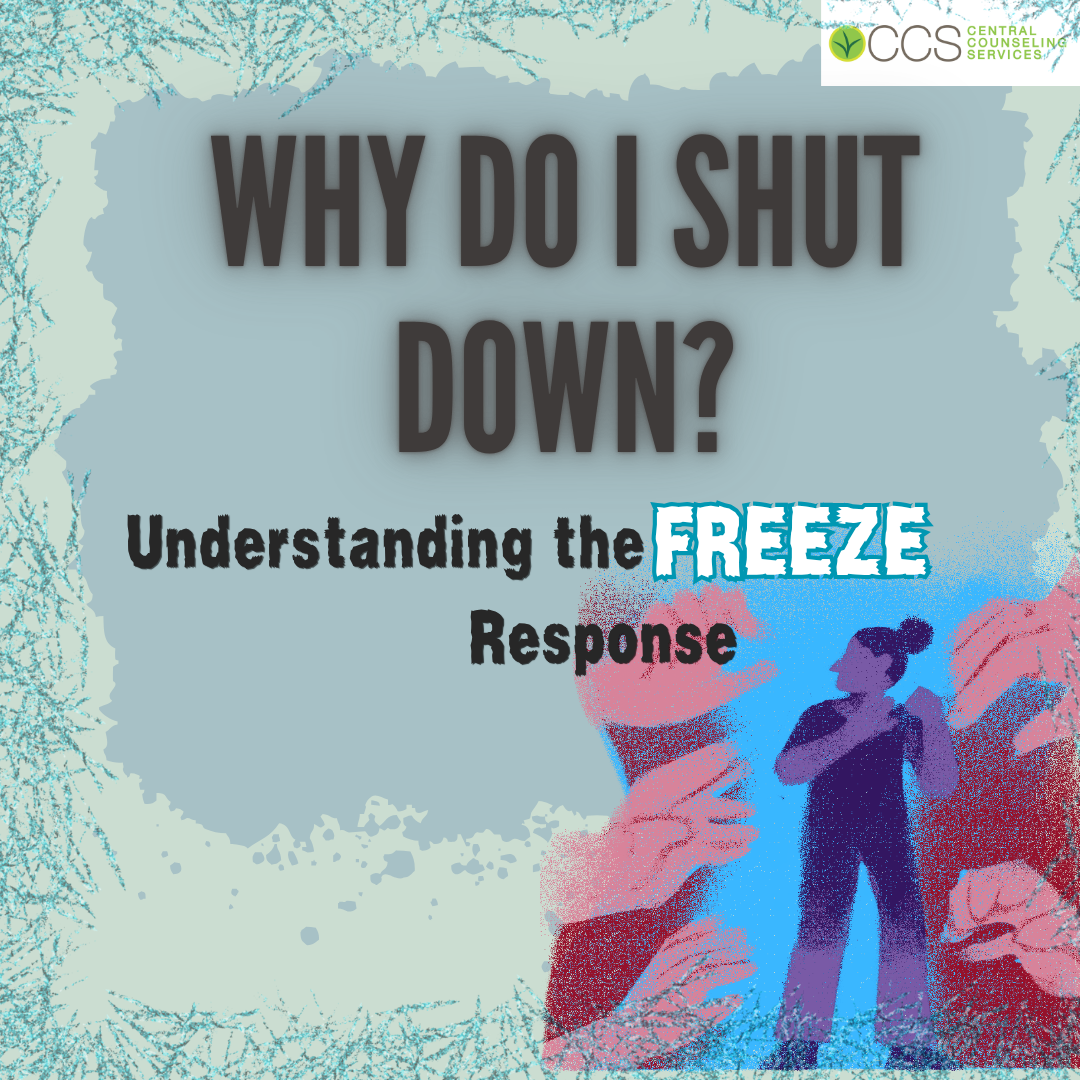
Have you ever been in a stressful conversation and suddenly gone blank?
Maybe someone asked you a simple question, but your mind emptied. Maybe you wanted to speak up, but your body felt frozen. Maybe after an argument, you shut down completely, avoided your phone, or felt like you couldn’t make even one more decision.
For many people, this experience brings shame.
They wonder, Why can’t I just respond? Why do I freeze? Why does my brain stop working when I need it most?
The answer may not be a lack of effort, motivation, or care.
It may be your nervous system trying to protect you.
What Is the Freeze Response?
Most people have heard of “fight or flight,” the body’s survival response to danger or stress. But there is another response that often gets less attention: freeze.
The freeze response happens when the nervous system feels overwhelmed and does not believe fighting or fleeing is possible. Instead of moving into action, the body slows down. The mind may feel foggy. Words may disappear. Emotions may feel distant or too big to access.
Freeze can look like:
Going blank during conflict
Feeling stuck or unable to make decisions
Avoiding messages or conversations
Feeling disconnected from your body
Numbing out emotionally
Wanting to respond but feeling unable to move or speak
This can be confusing, especially when the situation does not look “dangerous” from the outside. But the nervous system does not only respond to physical danger. It can also respond to emotional threats, conflicts, shame, pressure, or past experiences that have taught the body to brace for harm.
Why Shutting Down Happens
Shutting down is often the body’s attempt to reduce overwhelm.
If your system feels flooded, freezing may be its way of saying, This is too much right now.
This can happen during arguments, difficult conversations, work stress, family conflict, or moments when someone feels criticized, trapped, or emotionally unsafe.
For people with trauma histories, anxiety, chronic stress, or long-term emotional strain, the freeze response may activate more easily. The body may react before the thinking brain has time to assess what is happening.
This is why shutting down can feel so frustrating. You may know logically that you want to respond, explain, or take action, but your body has already moved into protection mode.
Freeze Is Not Failure
One of the most important things to understand is this:
Freezing is not weakness.
It is not laziness.
It is not proof that you do not care.
It is a protective response.
The problem is that a response designed to protect you in moments of overwhelm can become disruptive when it starts interfering with communication, relationships, work, or daily life.
When someone freezes often, they may begin avoiding situations that feel emotionally intense. They may stop expressing needs, delay important decisions, or withdraw from people they care about. Over time, this can create isolation and self-doubt.
How to Begin Coming Out of Freeze
The goal is not to shame yourself into action. That usually makes the nervous system feel even less safe.
Instead, healing begins with helping the body feel grounded again.
Small steps may include:
Noticing what happens in your body before you shut down
Taking slow breaths with longer exhales
Naming what is happening, such as “I am feeling overwhelmed”
Placing your feet firmly on the floor
Using gentle movement, like walking or stretching
Asking for a pause during difficult conversations
Returning to the conversation once you feel more regulated
These tools may seem simple, but they help send the body a message: I am here. I am safe enough in this moment. I can come back slowly.
How Therapy Can Help
Therapy can help people understand their nervous system responses without judgment.
Instead of asking, What is wrong with me? Therapy creates space to ask, What happened that taught my body to protect me this way?
A therapist can help you recognize patterns, build grounding tools, process past experiences, and practice new ways of responding when overwhelm shows up.
You Can Learn to Feel More Present
If you shut down when life feels overwhelming, you are not broken.
Your body may be trying to protect you in the only way it knows how.
With support, patience, and practice, it is possible to build new patterns. You can learn to notice overwhelm sooner, communicate your needs more clearly, and feel more present in your life and relationships.
Feeling Stuck or Shut Down?
You do not have to figure it out alone.
If overwhelm has been affecting your relationships, work, or ability to feel present, therapy can help you understand what is happening and build tools to feel more grounded.
Call 951-778-0230 or Fill out a booking request today.
About Central Counseling Services
At Central Counseling Services, our therapists work with individuals, couples, and families to support mental health, communication, emotional regulation, and healing. CCS provides care in Riverside and Murrieta and offers support for people navigating anxiety, depression, stress, relationship challenges, and other life concerns.