
Father’s Day: Love, Grief, Connection, and Mental Health
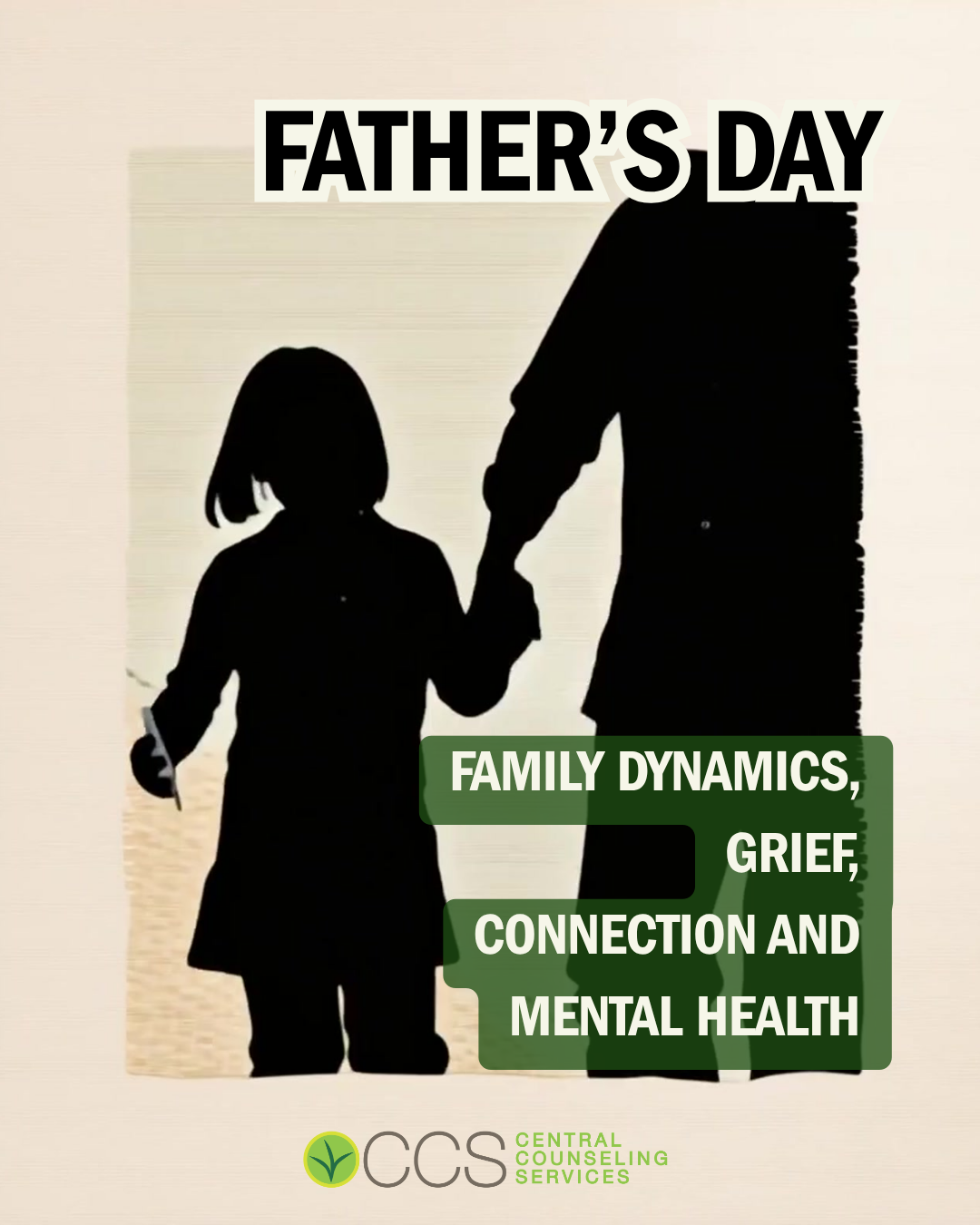
Father’s Day is often presented as simple.
A card.
A phone call.
A family meal.
A social media post.
A day to celebrate dads.
And for many people, Father’s Day is joyful. It may be a day filled with gratitude, connection, laughter, and love.
But for others, Father’s Day can feel complicated.
It can bring grief. Stress. Anger. Longing. Guilt. Relief. Loneliness. Pressure. Or memories of a relationship that did not feel safe, steady, or emotionally available.
Some people are celebrating a father they love.
Some are grieving a father they lost.
Some are missing the father they wish they had.
Some are trying to be the parent they never received.
Some are navigating strained family relationships.
Some are quietly trying to get through the day.
All of those experiences are real.
Father’s Day can hold more than one feeling.
When a Holiday Brings Up More Than Celebration
Holidays often carry emotional expectations.
We are told what the day is supposed to mean. We see photos, captions, family gatherings, and messages that make everything look easy. But real families are rarely that simple.
For some people, Father’s Day may bring up questions like:
Why does this day make me feel sad?
Why do I feel guilty for not wanting to call?
Why do I feel angry when everyone else seems happy?
Why does parenting feel so heavy right now?
Why do I miss someone who also hurt me?
Why am I struggling when my life looks fine from the outside?
These questions do not mean you are being dramatic.
They mean something about the day is touching a meaningful part of your story.
Grief Does Not Always Look the Same
Father’s Day can be especially painful for people who are grieving.
That grief may come from the death of a father, grandfather, father figure, partner, child, or loved one. It may also come from a different kind of loss: the loss of the relationship you wanted, the apology you never received, the safety you needed, or the connection that never fully existed.
Grief is not only about losing someone physically.
Sometimes grief is about recognizing what should have been there and was not.
You may grieve a loving father.
You may grieve an absent father.
You may grieve a complicated father.
You may grieve the version of fatherhood you hoped for.
You may grieve while still feeling love.
You may grieve while also feeling anger.
Mixed emotions do not make your grief less valid.
They make it human.
The Pressure on Fathers and Father Figures
Father’s Day can also feel complicated for fathers themselves.
Many fathers, stepfathers, grandfathers, foster fathers, adoptive fathers, and father figures carry pressure quietly. They may feel responsible for providing, protecting, leading, fixing, or staying strong even when they are exhausted.
Some may struggle with anxiety, depression, trauma, parenting stress, relationship tension, or the fear that they are failing their family.
Others may be trying to parent differently than they were parented.
That kind of emotional work can be heavy.
Being a father does not mean you have to have every answer. It does not mean you cannot struggle. It does not mean your mental health does not matter.
Fathers need support too.
When Family Relationships Feel Complicated
For some families, Father’s Day brings up relationship tension.
Adult children may feel unsure about boundaries. Couples may disagree about how to spend the day. Blended families may navigate loyalty, grief, or role confusion. Parents may feel unseen. Children may feel caught between households.
These dynamics can be especially difficult when everyone feels pressure to make the day look happy.
But avoiding the discomfort does not always make it disappear.
Sometimes family stress needs a safe place to be understood, not just managed for one more holiday.
Therapy can help individuals, couples, and families talk through patterns that feel difficult to name at home. It can support healthier communication, boundaries, grief processing, and emotional repair.
You Can Honor the Day Without Ignoring Yourself
If Father’s Day feels complicated, it may help to approach it with honesty instead of pressure.
You might ask yourself:
What do I need today?
What emotion am I trying not to feel?
What boundary would help me feel more grounded?
Who feels safe to talk to?
What would honoring myself look like today?
For one person, that may mean making the phone call.
For another, it may mean not making the phone call.
For someone else, it may mean visiting a grave, taking a walk, texting a friend, journaling, resting, or spending time with chosen family.
There is no single “right” way to move through a day that holds complex emotions.
Therapy Can Help You Make Sense of the Pattern
Sometimes one holiday brings up years of feelings.
A day like Father’s Day may highlight grief, unresolved hurt, family roles, relationship stress, trauma, or the pressure to keep pretending everything is fine.
Therapy can help you slow down and understand what is coming up without judgment.
It can support you in exploring questions like:
How did my relationship with my father shape how I see myself?
What family patterns am I trying to break?
Why do certain conversations make me shut down?
How do I set boundaries without drowning in guilt?
What kind of parent, partner, or family member do I want to become?
How do I grieve what I did not receive?
You do not have to have a crisis to seek support.
Sometimes therapy begins with one honest sentence:
“This day is harder for me than people realize.”
Support Is Available
At Central Counseling Services, we support individuals, couples, and families navigating grief, anxiety, trauma, parenting stress, relationship challenges, and life transitions.
If you are in Murrieta, Temecula, Menifee, Riverside, or the surrounding areas, and Father’s Day brings up more than celebration, you are not alone.
Your feelings do not have to be simple to matter.
📞 Call us: 951-778-0230 or Click below to learn more:
Educational content only. This blog is not therapy or a substitute for professional care.